
The ‘blue dragon’ is back from the brink
CALL TO EARTH FROM CNN Science
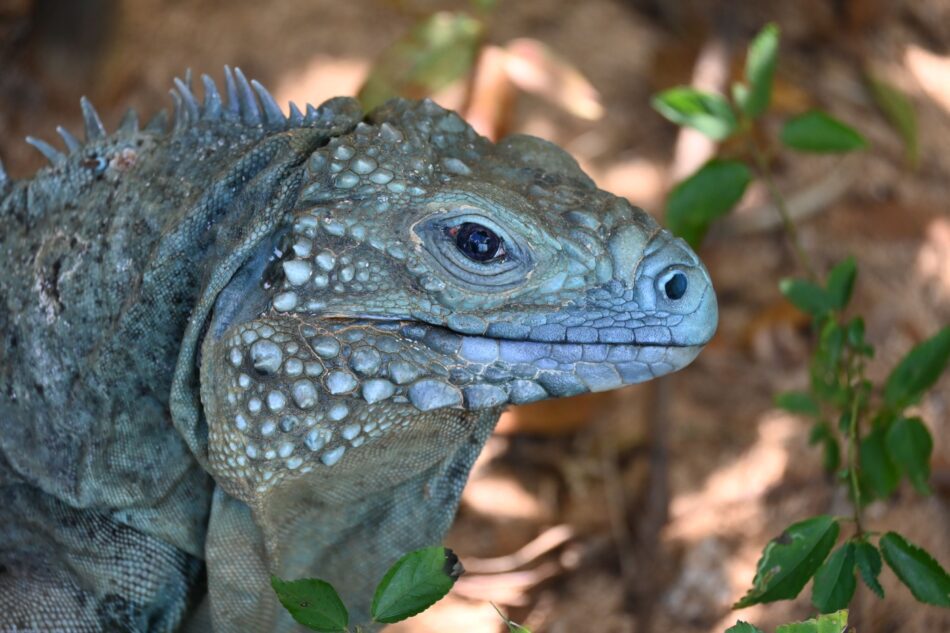
Blue iguanas, also known as “blue dragons,” are endemic to the island of Grand Cayman in the Caribbean. Laura Butz/National Trust
By Anna Tunkova and Quinta Thomson, CNN Updated 1:23 PM EDT, Wed July 30, 2025
Two million years ago, the Grand Cayman Island rose from the depths of the Caribbean Sea and not long after, giant blue reptiles began to roam its shores. With a spiny crest, pre-historic features and striking blue scales, the Grand Cayman blue iguana appears to have lumbered out of a lost world.
Endemic to Grand Cayman, the largest of the Cayman Islands, the impressive reptile holds the title of the island’s largest native land animal. But it was only in 2004 that they were officially declared a species, after being differentiated from their cousins, the West Indian rock iguana.
These unique animals were once ubiquitous on the island, however the arrival of humans, and the invasive predators that came with them, brought deadly threats to the species. Habitat loss, hunting and a wave of feral cats and dogs pushed the lizards, referred to as “blue dragons,” to the brink of extinction. In the early 1990s, researchers estimated there were between 100 and 200 blue iguanas surviving in the wild. But within a decade, those numbers had plummeted, with fewer than 25 individuals remaining in 2002.
Thanks to ongoing conservation efforts, the blue iguana is back from the brink of extinction. Through captive breeding and a habitat protection program, over 1,200 have now been released into the wild, primarily in protected areas. This led to the species being reclassified from “critically endangered” to “endangered” in 2012, according to IUCN’s Red List of Threatened Species
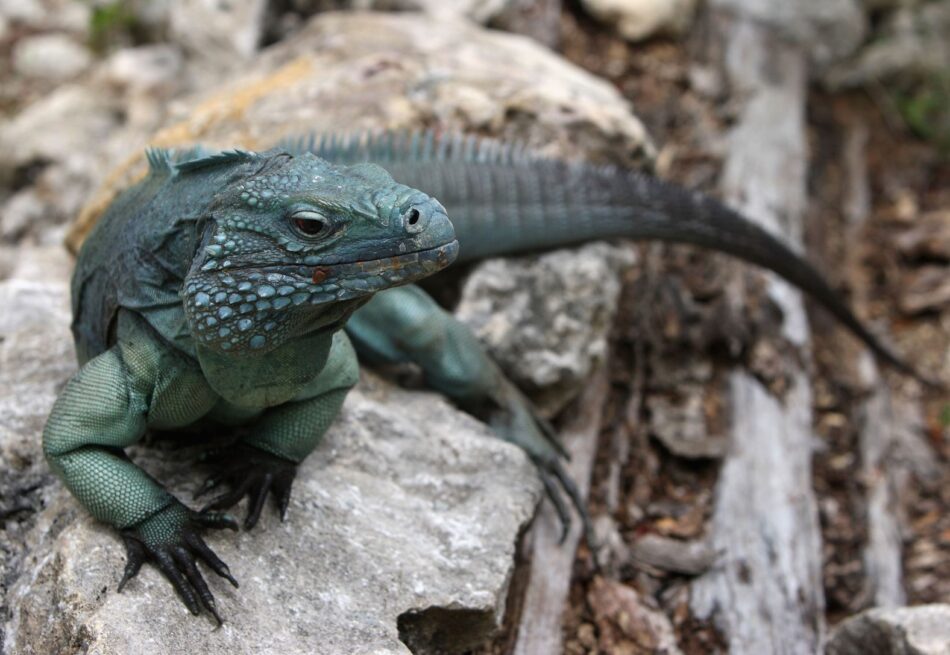
Blue iguanas can grow over 1.5 meters (5 feet) long, weigh more than 11 kilograms (25 pounds) and live 25 to 40 years in the wild. According to Frederic Burton, conservationist and director of the Blue Iguana Recovery Program which has spearheaded efforts to save the species, the animals frequently exhibit human-like behaviors such as yawning, sneezing and engaging in prolonged territorial disputes. David Rogers/Getty Images
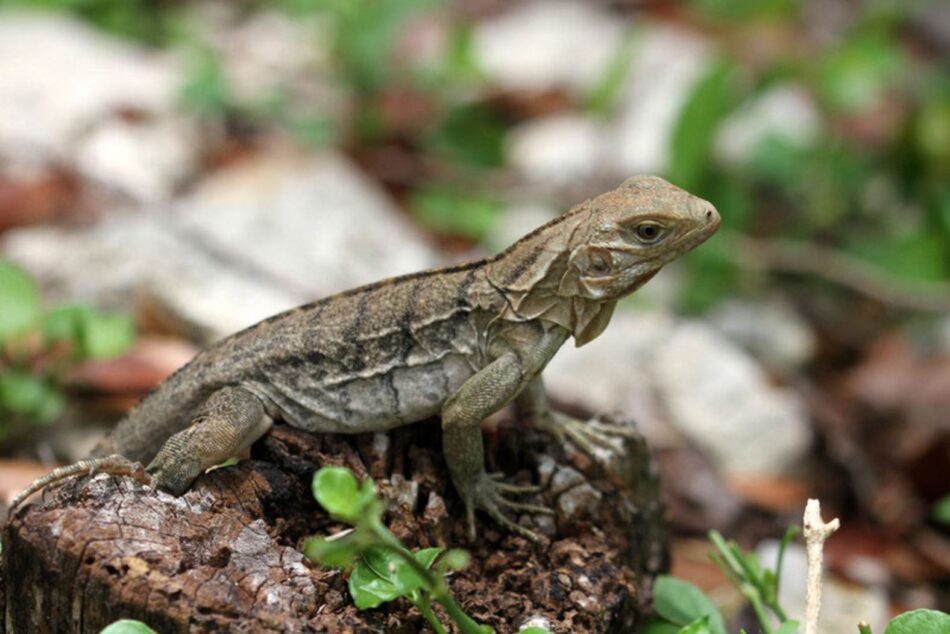
Adult blue iguanas are solitary and both males and females have multiple mating partners. While females typically remain in one area, males roam widely in search of mates. Once mating has taken place, females can exhibit aggressive, territorial behavior towards males, actively driving them away.
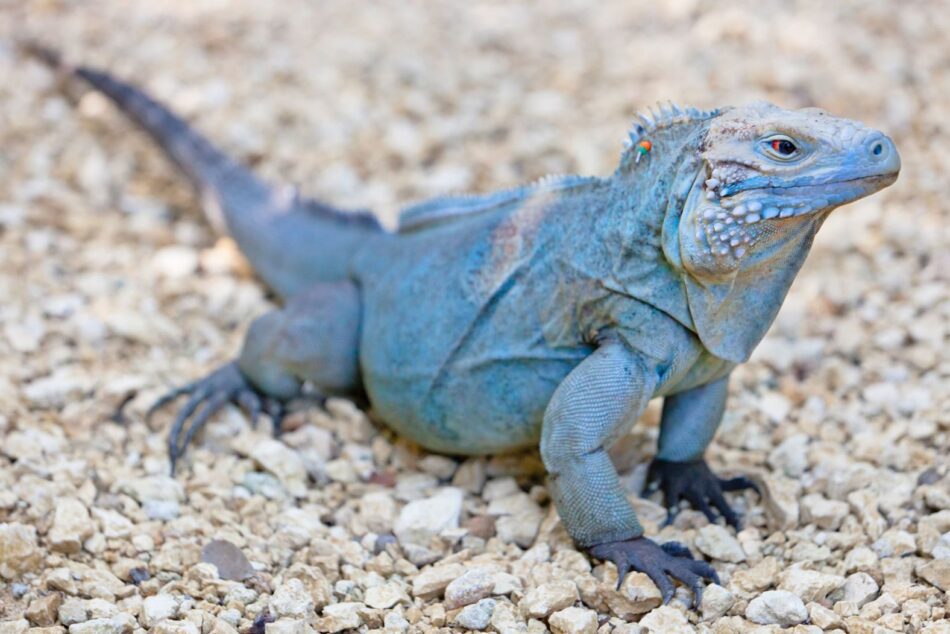
A striking feature of these animals is their ability to turn a dazzling blue. “Their fluctuation of color primarily serves as a signalling tool and is often used to scare off danger,” says Burton. It is especially noticeable in males, he adds, which turn an even more intense shade during the breeding season to attract mates. He explains that the iguanas have melanophores (pigment cells) in their skin, which expand and contract, allowing them to appear darker or lighter. Flavio Vallenari/E+/Getty Images

While it doesn’t have deep roots in traditional folklore like other animals, its dramatic recovery through conservation has made it a symbol of Grand Cayman’s care for the environment. “The public’s emotional connection played a big role in the success of the restoration efforts,” says Burton. “Blue iguanas are part of Cayman now.” Laura Butz/National Trust
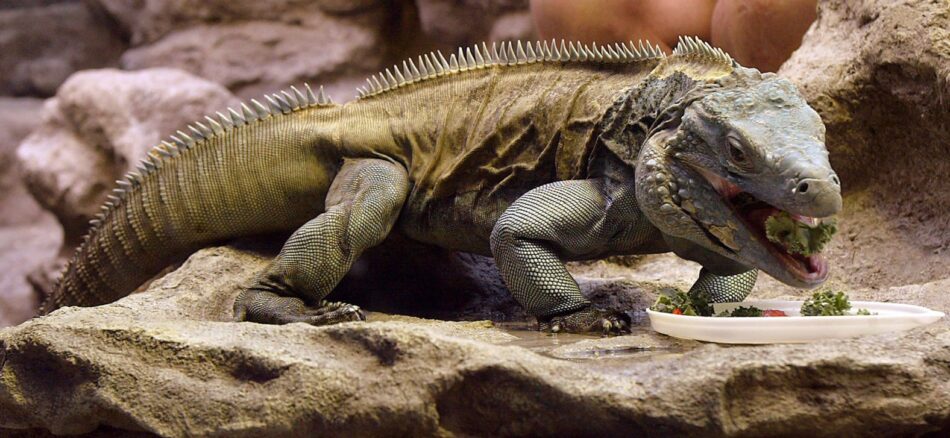
Blue iguanas are meticulous plant-eaters. According to Burton, they quickly flick their tongue to sample and chemically test leaves, fruits and flowers before deciding what to eat. This same tongue flicking also helps them sense pheromones, find potential mates, and gather information about their environment. Frank Polich/Reuters

The National Trust for the Cayman Island’s Blue Iguana recovery program is the cornerstone of the species’ restoration. According to Burton, captive breeding has been the most successful method and is the primary reason blue iguanas are around today. Conservationists collect eggs from wild nests, incubate them until they hatch each summer, and then raise the young iguanas in a safe environment for two to three years. The efforts don’t stop at release — ongoing work is essential to ensure the iguanas can survive. Dedicated teams manage threats like invasive predators and maintain continual tracking and field research. Laura Butz/National Trust
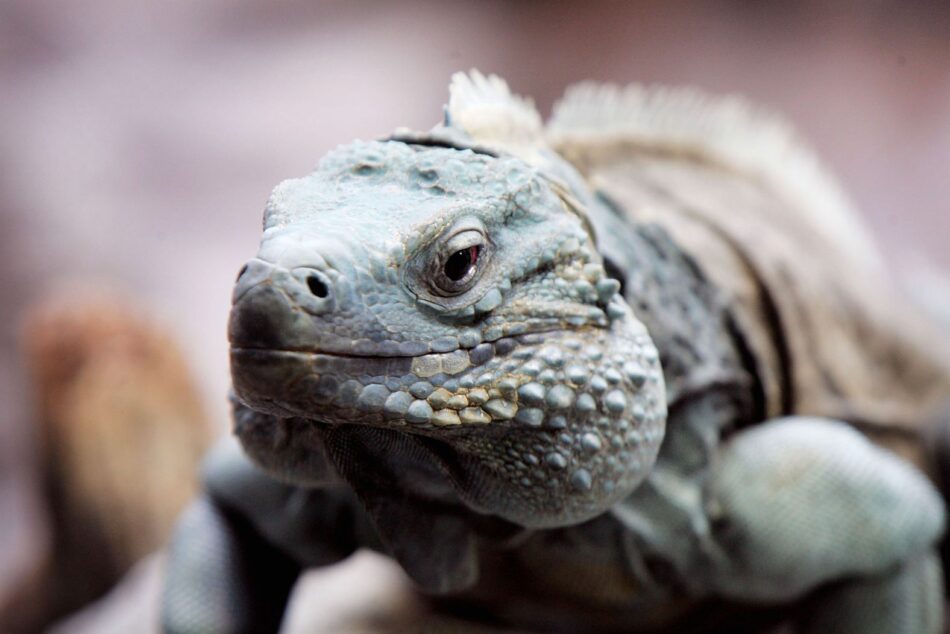
Despite the remarkable success, the species’ long-term future remains uncertain. Burton notes that for blue iguanas to support themselves in the wild, they “need a solution to the feral cat problem.” To address these ongoing risks, conservationists are looking to strengthen predator control, enhance habitat protection, and expand protected areas. Scott Olson/Getty Images
For more on this story go to: CNN
See also Cayman News Service Article Landowner wants blue iguana protective order lifted
(CNS): Local landowner James Bergstrom, who, without planning permission, cleared pristine, primary habitat in East End between two nature reserves that are home to Grand Cayman’s endangered blue iguanas, is seeking to get an interim protective order, put in place by Cabinet, overturned so he can continue clearing roads and trails on the land…………………………………………………..