
The Caribbean as a “Zone of Peace” and the Role of Civil Society
By Rebecca Theodore
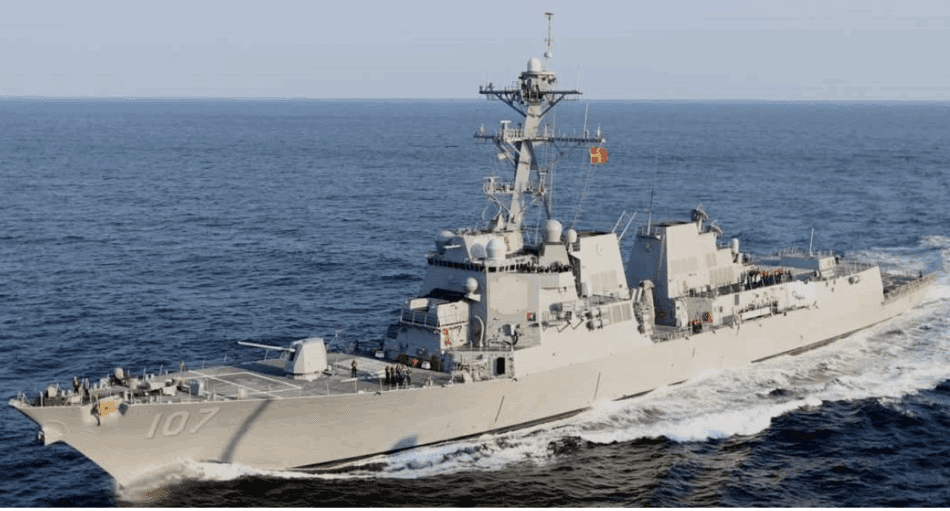
As diplomatic relations between the United States and the Caribbean become increasingly complex, it now appears evident, that a peace chorus juxtaposes civil society’s dire situation amidst resounds of US war drums in the Caribbean Sea.
Here, the Caribbean reveals a stark reality of peace on a desolate shore.
While the Caribbean still reminiscence the pirate’s cruel hand, and legacies of colonialism and exploitation are marked in Cold War proxy conflicts, the Caribbean appears haunted in its own historical mirror. Civil society now navigates a field of political autonomy, in a quest for a zone of peace, that weakens with each passing hour on that wretched pole of time.
True to a point, the rejection of neo- colonialism led to the emergence of independence for Caribbean states from the mid 20th century. This culminated in a self determined Caribbean that was “ satellites of none” and “ in nobody’s backyard,” as articulated by former Barbadian Prime Minister Errol Barrow, and former Grenadian Prime Minister Maurice Bishop.
Still, as the trade winds evoke painful and bitter memories beneath the gaze of benevolent sapphire skies, the canons of a Monroe Doctrine continue to be a challenge in the Caribbean Sea. Exemplified by the US invasion of the Dominican Republic, the US invasion of Grenada, the US blockade of Cuba, the US Navy operations in Vieques Puerto Rico, and the ongoing interventions in Haiti, the US is again escalating its presence in the waters of the southern Caribbean Sea.
Meanwhile, CARICOM- the Caribbean community intergovernmental organization that provides a platform for member states to address shared challenges through diplomacy and co-operation is now mired in conflict. According to the ministry of foreign and Caricom affairs “the US military services presence in Trinidad and Tobago highlights the US commitment to regional security and co-operative efforts in the Caribbean.” This clearly means that the once strong foreign policy co-ordination among Caribbean states has deteriorated, leaving member countries vulnerable to external influences like US aggression and the undermining of a united front against attacks.
But how did the Caribbean arrive at this juncture?
Indeed, “hyping the threat” by Trinidad and Tobago’s prime minster Kamla Persad Bissessar may be deemed suspicious by critics. On the other hand, the United States military operations aim at narco and human trafficking and other forms of transnational crime that are pointed at allowing the region to be a true zone of peace is also a chessboard of a global game.
And it is here that the zone of peace carries a message on its breeze.
In due course, the zone of peace not only serves as a strong unified commitment for regional security, but also exposes the brutal ills of Caribbean politics and foreign policy.
More significantly, a zone of peace is rendered obsolete if it is not tied to the reform of the electoral process in the Caribbean. Most obvious is the fact, that the Caribbean is now a zone where security debates are determined by state actors. Caribbean governments prioritize national security apparatuses over community level solutions. Weak institutions and systemic corruption undermine good governance, and foster distrust in political systems in the Caribbean.
In the Caribbean islands of Dominica, St Vincent and the Grenadines, Barbados, Belize and Antigua and Barbuda, there is a ‘crisis of trust’ in traditional politics. It is one where corruption has created a two- tiered system of justice and the legal system continues to be weaponized. Security landscapes are dominated by organized crime, gun violence, drug and human trafficking, while the social fabric of the Caribbean remains torn by government corruption. Authoritarian external influences provide peripheral cyber security support to corrupt governments. Research indicate that Caribbean governments fail to enforce laws that serve the interest of the public good, thus undermining press freedoms, access to information and manipulation of the democratic process. Transparency International further defines this as “the abuse of entrusted power for private gain.”
Corruption also manifest as legal in the quasi governments of Barbados, Dominica, Belize and St Vincent and the Grenadines with free movement of people for the benefit of vote buying and voter intimidation, voter fraud, and manipulation of electoral processes and institutions, Widespread corruption, patronage, and nepotism are causing public disillusionment and a loss of faith in public institutions, abuse of state resources by incumbents, campaign finance violations, media manipulation, and the use of political patronage to maintain power and dominance.
Among others, these are some of the fundamental factors that pose a significant threat for US invasion in the Caribbean. These are the activities that erode public faith in democratic institutions in the Caribbean and make it difficult for the Caribbean to be considered as a zone of peace. Puppet governments in Dominica, St. Vincent and the Grenadines and Venezuela are serving decades in power, welcoming a new chapter of poverty and populism in Caribbean politics and manipulation of the masses.
Caribbean governments have prioritised personal gain over public service and this destabilises the social cohesion that is responsible for peace in the Caribbean, thus undermining public trust and the rue of law. Civil society must now seek to resolve their differences and their cries for peace with a reform of the electoral process, and take a firm stand against their abusive governments.
The Caribbean is not a dream of the past, but a promise to consider. The strength of the people and the sea should be able to render an unyielding promise of serenity against invasion. However, corruption and weak institutions continue to threaten the peace and that of western national security alike with illegal passport sales and security risks.
Moreover, the rise of transnational crime, drug and human trafficking and organ harvesting coupled with fragile economies in the Caribbean need to be re-examined. Together, they highlight the need for Caribbean governments to begin to support policies with the United Nations, the US State Department and other international bodies.
Accordingly, civil society must also play a multifaceted role in demanding free and fair elections, and legal electoral reform procedures on the Caribbean island of Dominica before demanding for a zone of peace. Advancing the role of peace is not only a defense of sovereignty that shapes policy and fosters co-operation, but also one that hold foul governments and despots accountable.
Hither, the zone of peace is challenged. The Caribbean’s common will is sighted.
Yet, our children and our future slumbers.

Rebecca Theodore
An international journalist and globally accredited keynote speaker, Theodore has over 20 years working with leading media brands . She writes extensively on politics, national security, human rights and the environment. Contact: [email protected]




It is time to end the crisis actors and their self-serving plots and plans that only further seek to degrade the progress and development for entire populations across the Caribbean Archipelago.
It is clear there are no future plans to aid taxpayers in their quest to rise above poverty and social disruption, or the ability to acquire generational wealth, although they pay handsome salaries to politicians, their pleas are ignored. These are societal crimes.
Politicians have had 100 years to get ot right, the last 60 years a pretense of independence, a facade, but the only people getting wealthy are them and their benefactors who are not the taxpaying electorate. Should the people not end this in the now, it will escalate to irreversible levels.