SARSEA project strengthens cooperation with Saint Lucia and Validates 2026 Strategy
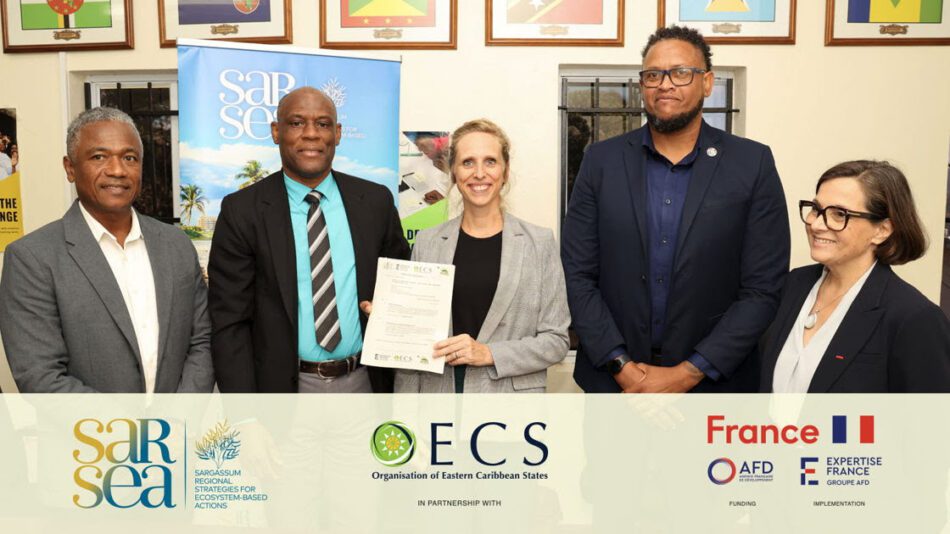
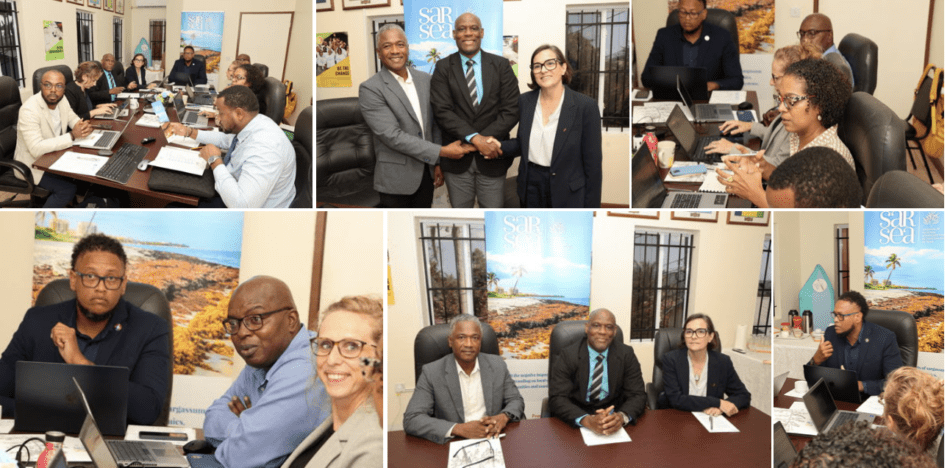
On Thursday, February 12, Expertise France, the Government of Saint Lucia and the Organisation of Eastern Caribbean States, OECS, signed a memorandum of understanding in the presence of Her Excellency Marie-Noëlle Duris, Ambassador of France to the Eastern Caribbean States, to Barbados and to the OECS. This agreement represents a significant step forward in the coordinated efforts to manage the large-scale sargassum accumulations that have been impacting Caribbean coastlines since 2011.
Stronger collaboration for a regional response
SARSEA (Sargassum Regional Strategies for Ecosystem-based Actions) is a regional initiative designed to enhance the ability of small Caribbean islands to respond to the large amounts of sargassum washing ashore. This project combines integrated management approaches, efforts to restore seaweed populations, and scientific research to mitigate against the phenomenon.
The memorandum of understanding, signed on the side-lines of the project’s operational and steering committee meetings by Expertise France, the Ministry of Agriculture, Fisheries, Food Security, and Rural Development of Saint Lucia, and the OECS, outlines the contributions, rights, and responsibilities of each stakeholder involved. The agreement seeks to formalise collaboration among scientists, private organisations, civil society groups, and the project’s leadership to manage sargassum in an integrated and sustainable way, while exploring the possibility of using this seaweed as an economic generating resource.
| Permanent Secretary in Saint Lucia’s Ministry of Agriculture, Fisheries, Food Security and Climate Change, Mr. Bradley St. Ange stated: “We recognise and deeply appreciate the support of Agence Française de Développement and Expertise France for making this possible. France has demonstrated consistent engagement on the issue of sargassum both nationally and regionally, and we value this partnership. We also acknowledge the leadership of the OECS Commission in advancing a regional framework that allows members to share knowledge, align strategies, and build collective reserves. ” |
Similar agreements have been signed with the relevant ministries in Dominica, Grenada, and Saint Vincent and the Grenadines, the other three countries participating in the project.
The SARSEA project is now moving into its operational phase, with the setup of regional thematic workshops aimed at engaging technical and institutional stakeholders in countries affected by the phenomenon. In addition, a grant of €1 million has been given to the OECS to enhance the sargassum value chain and two calls for projects will be initiated. One initiative will focus on private stakeholders interested in the utilisation of Sargassum, while the other will target scientists to conduct further research on the effects on human health and biodiversity.
Participants of the meeting unanimously highlighted the significance of these key days in advancing the implementation of the SARSEA project and strengthening the regional response to sargassum strandings.
| “It’s a phenomena that is affecting our livelihood, our economies, and our people in general. And it is clear that the challenge is one that we have to combine all our forces together, regionally, in order to address it,” remarked OECS General Counsel, Mr. Dwight Lay. |
Her Excellency Marie-Noëlle Duris, Ambassador of France to the Eastern Caribbean, Barbados and the OECS also offered her encouragement:
| “No country can address this challenge alone. Sargassum does not recognise borders. Our response must therefore be collective, coherent and forward looking. The Memorandum of understanding signed today reflects exactly that spirit.” |