
Jamaica: JCF Looking to Integrate Japanese ‘Koban’ Model in Local Policing
From Jamaica Information Service
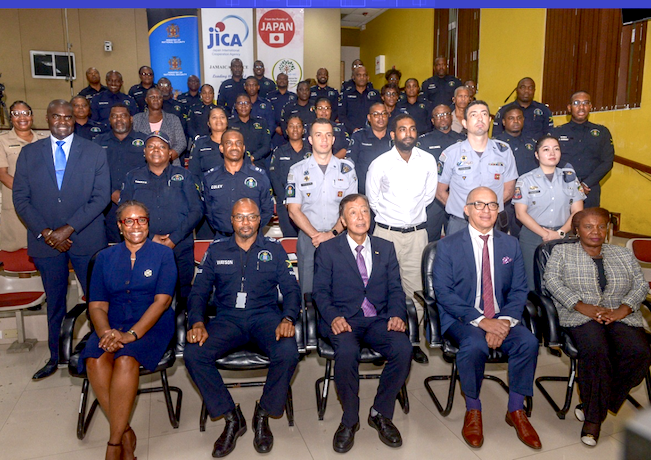
Photo: Dave ReidPermanent Secretary in the Ministry of National Security and Peace, Ambassador Alison Stone Roofe (seated left), along with (from second left, seated) Head of the National Police College of Jamaica (NPCJ), Assistant Commissioner of Police (ACP) Merrick Watson; Ambassador of Japan to Jamaica, His Excellency, Yasuhiro Atsumi; Chargé d’Affaires, Brazilian Embassy in Jamaica, Antonio Otavio Sá Ricarte; and Chief Technical Director in the Ministry of Foreign Affairs and Foreign Trade, Ambassador Sharon Miller, share a photo opportunity with members of the Brazilian Military Police, and the 37 members of the Jamaica Constabulary Force (JCF) who have completed training under the Brazil-KOBAN community policing training programme. The closing-out ceremony was held in September at the NPCJ in Twickenham Park, St. Catherine.
THE FULL STORY
The Jamaica Constabulary Force (JCF) is looking to adapt the KOBAN-Brazil community policing as a model for strengthening police-citizen relations in the fight against crime in Jamaica.
Practised in Sao Paulo, Brazil, the Japanese-style community policing system focuses on small, accessible police posts for community interaction.
The objective is to build trust and collaboration between law enforcement and local communities.
Thirty-seven members of the JCF completed specialised hands-on training in the system in September 2025, delivered by the Military Police of the State of Sao Paulo (PMESP), to integrate these new strategies across all JCF divisions for a more effective, community-focused force.
They were equipped with skills to improve collaboration with citizens and apply best practices in Jamaican communities.
The training was undertaken as part of the ‘Jamaica Capacity-Building on the Community Policing-KOBAN System’ programme, which is a tripartite agreement involving Jamaica, Brazil, and Japan, aimed at strengthening Jamaica’s national security and safety.
Head of the National Police College of Jamaica (NPCJ), Assistant Commissioner of Police (ACP) Merrick Watson, said the KOBAN system is intended to complement the model used by members of the JCF.
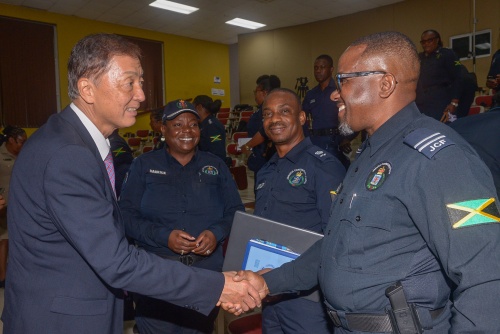
He noted that participants in the training have been equipped to promote greater cooperation, foster deeper public engagement and, ultimately, improve overall efficiency in ensuring the safety and security of communities.
Speaking at the closing ceremony held at the NPCJ’s Twickenham Park location in St. Catherine in September, ACP Watson said that the insights gained from the training offer a powerful toolkit that will allow the JCF members to be more proactive, more visible, and more responsive to the needs of the communities they serve.
He said that the training “reinforces the belief that true community and safety is built on partnership and trust, pillars of community policing that the JCF Community Safety and Security branch champions every day”.
He told the graduates that the new knowledge and tools acquired “should assist each of you to comprehend and modify strategies, promote teamwork, and enhance our collective effectiveness in maintaining public engagement and safety”.
He charged them to take this knowledge back to their divisions and integrate these enhanced community policing strategies into their daily operations.
“The training is not just about adapting a model but embracing a philosophy that places the community at the heart of Jamaica’s policing efforts,” he pointed out, urging the officers to apply what they have learned with diligence, innovation, and in an unwavering commitment to service.
“Let this be the beginning of a sustained effort to build stronger, safer communities across Jamaica, inspired by the best global practices. Your insight, your enthusiasm, and your dedication are crucial as we move forward,” he added.
Head of the JCF’s Domestic Violence Intervention Programme, Deputy Superintendent of Police (DSP) Jacqueline Dillon, who participated in the training programme, said the initiative exemplifies the power of international cooperation in bringing global best practice into local relevance.
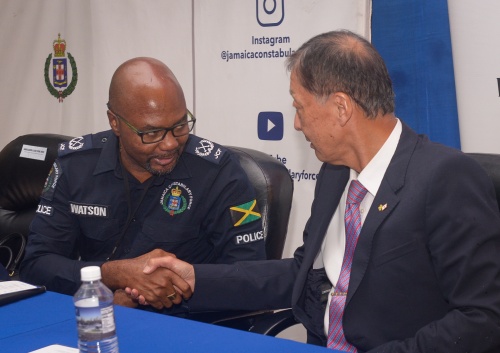
She hailed the international partners, noting that “your contribution has enriched our understanding and inspired us to adapt the model in ways that reflect Jamaica’s unique social focus”.
“I was overly excited about your presentation on domestic violence intervention because I am sure this is somewhere that we are going to go. You have not only transferred knowledge but ignited a spirit of innovation that will endure the test of time,” she stated.
She noted that, having been equipped in the KOBAN model, “we are now the torchbearers of a new era in community policing and human rights”.
She said that the system has the capacity to strengthen community-based policing in Jamaica, if the tenets learned are implemented effectively.
She declared that the relationships forged, the skills and knowledge acquired will strengthen institutions, empower communities “and advance Jamaica’s vision for a safer and more peaceful and inclusive society”.
Ambassador of Japan to Jamaica, His Excellency, Yasuhiro Atsumi, said his country shares the same aspirations as Jamaica and Brazil for the attainment of peace, stability, peaceful resolution of conflicts and practices that lead to consensus-based decision-making.
“Indeed, since 37 JCF members have completed training, I am even more confident that significant benefits will be reaped by Jamaica through the modelling and implementation of a Japanese-style community policing cooperative system over time,” he said.
Chargé d’Affaires, Brazilian Embassy in Jamaica, Antonio Otavio Sá Ricarte, hailed the tripartite collaboration as a “vision for a safer, more engaged, and more inclusive society”.
He said that the dedication of the trained officers “represents the future of community policing in Jamaica, rooted in respect, dialogue, and service”.
Chief Technical Director in the Ministry of Foreign Affairs and Foreign Trade, Ambassador Sharon Miller, for her part, said that the collaboration has enhanced the capacities of law-enforcement personnel, enabled the exchange of best practices in community policing, and strengthened trust between the JCF and the communities they serve.
“This initiative is a shining example of the dynamic partnerships Jamaica shares with Brazil and Japan,” she noted.
Speaking with JIS News, Commissioner of the Independent Commission of Investigations (INDECOM), Hugh Faulkner, welcomed the capacity-building training for the JCF.
“We believe improved relations between the citizen and the law-enforcement bodies could mean less reports to us, and for better harmony between the stakeholders which are the citizens and the law-enforcement body,” he told JIS News.
The KOBAN training focused on theoretical frameworks, core principles, practical tools, and strategies for community engagement.
Partners in the initiative are the Japan International Cooperation Agency (JICA), Brazilian Cooperation Agency (ABC), PMESP, JCF, and the Ministry of National Security.
Fifteen JCF members travelled to Brazil from March 1 to 22, 2024 for instruction, with 37 completing training under the programme.
SOURCE: https://jis.gov.jm/features/jcf-looking-to-integrate-japanese-koban-model-in-local-policing/