
How MAGA Hijacked Patriotism—and What Liberals, and America, Lost
Patriotism is no longer neutral—flags, anthems, and rallies have become politicized, leaving the left wary—but embracing progressive patriotism could restore shared civic values and bridge the divide.
Summary: Martina Moneke examines how patriotism—once a unifying expression of national pride—has been politicized in the United States, particularly by the MAGA movement. Flags, anthems, and public celebrations increasingly signal ideological loyalty rather than shared identity, leaving many liberals cautious and civic discourse fractured. Moneke argues that reclaiming a values-driven patriotism—centered on democracy, civil rights, social justice, environmental stewardship, and civic engagement—can restore these symbols as instruments of connection, helping Americans redefine what it truly means to love their country.
Author: Martina Moneke
Author Bio: Martina Moneke writes about art, fashion, culture, and politics, drawing on history, philosophy, and science to illuminate ethics, civic responsibility, and the imagination. Her work has appeared in Common Dreams, Eurasia Review, LA Progressive, Pressenza, Raw Story, Sri Lanka Guardian, Truthdig, and ZNetwork, among others. In 2022, she received the Los Angeles Press Club’s First Place Award for Election Editorials at the 65th Annual Southern California Journalism Awards. She is based in Los Angeles and New York.
Credit Line: This article is licensed by the author under the Creative Commons Attribution-NonCommercial-ShareAlike 4.0 International License (CC BY-NC-SA 4.0)
Date: November 20, 2025
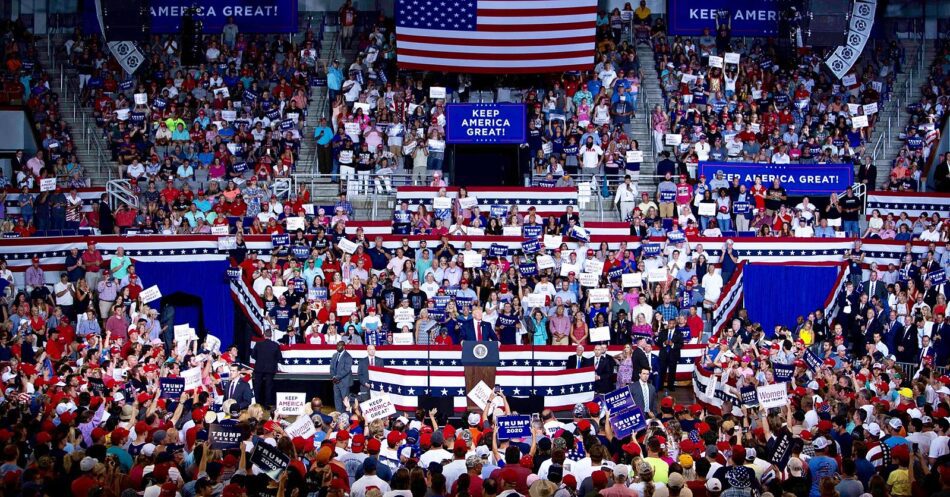
Wikimedia Commons Trump MAGA rally in Greenville
Patriotism is supposed to unite. Yet across the United States, symbols of national pride—the flag, the anthem, and public celebrations—have increasingly become signals of political allegiance. To some, a flag waved at a rally or a Fourth of July parade is a simple expression of love for the country. To others, it signals loyalty to an ideology they oppose. In recent years, particularly with the rise of the MAGA movement, patriotism has been politicized in ways that have left many liberals wary and civic discourse more fractured.
Some Americans have responded to this distortion with an assertive, defiant pride of their own. In a 2020 article, progressive political activist Jim Hightower captured a sentiment many on the left feel but rarely articulate:
As with so many other Americans, I’m flying our flag out of an assertive, perhaps defiant pride. For I am proud, damned proud, to be an American citizen, and, in this time of true woe and deep national divide, I’ll be damned to hell before I meekly sit by and allow this symbol of our nation’s founding ideals of liberty and justice for all to be captured and defiled by reactionary autocrats, theocrats, xenophobic haters, warmongers, America-firsters, corporatists, militarists, fearmongers, political weasels, and other rank opportunists.
Hightower’s fury is moral, not nationalist. His defiance reflects a progressive patriotism that is neither naïve nor blind but grounded in the nation’s unfinished democratic promise. Many liberals didn’t abandon patriotism—they watched as it was hijacked.
Historically, patriotism was a flexible, largely bipartisan concept, celebrated through rituals, symbols, and collective memories. The American flag traditionally symbolizes national pride, freedom, and unity; the national anthem serves as a shared acknowledgment of the country’s history and sacrifice; and holidays like the Fourth of July allow us to collectively celebrate independence. Americans across the ideological spectrum could participate in these rituals without implying political allegiance. Patriotism was meant to transcend politics, reinforcing shared identity rather than signaling partisan loyalty.
That began to shift in the late 20th century. Conservative movements in the 1980s and 1990s increasingly emphasized patriotic symbols in response to social change. Flags, lapel pins, and nationalistic rhetoric became markers of traditional values amid advances in civil rights, feminist movements, and broader cultural transformation. After 9/11, patriotic expression surged: flags, bumper stickers, and public displays of military support became ubiquitous, while dissent—especially anti-war protest—was often framed as unpatriotic. Symbols once neutral began to carry political weight.
Donald Trump’s 2015–2016 campaign marked a decisive turning point. “Make America Great Again” was patriotic yet unmistakably partisan. Patriotism became loyalty to a particular vision of America—nationalist, traditionalist, economically protectionist, anti-immigration, and deeply skeptical of progressive ideals. Rallies became stages for symbolic performance: flags, MAGA hats, chants, and slogans were markers of identity. Critics were branded un-American, creating a hierarchy of patriotism measured by allegiance to a political movement.
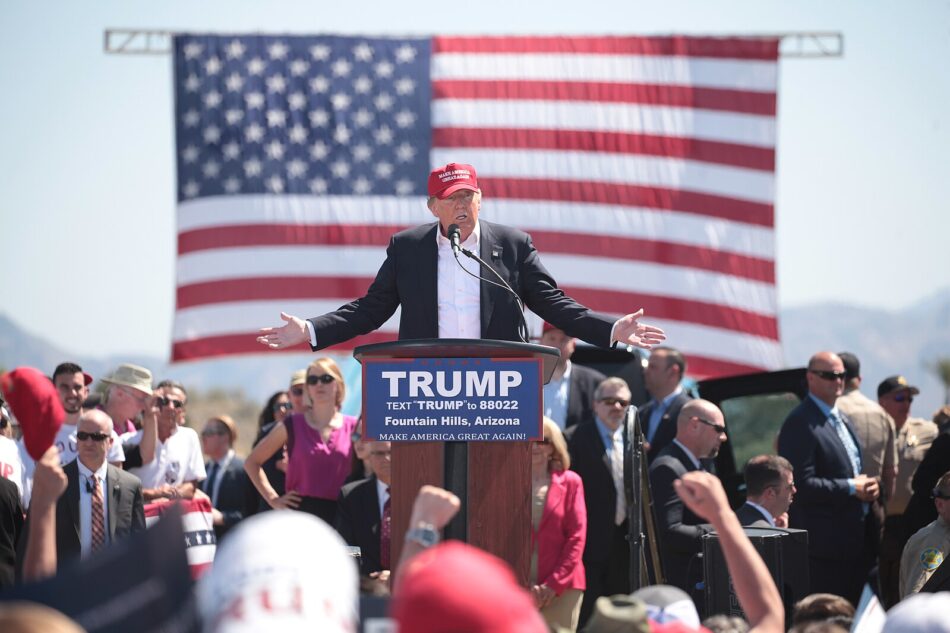
Wikimedia Caommons :Donald Trump by Gage Skidmore
This dynamic played out vividly in the controversy over Colin Kaepernick’s decision to kneel during the national anthem at an NFL game to protest racial injustice. Conservatives framed his gesture as unpatriotic, while liberals saw it as a patriotic critique, a demand that the country live up to its founding principles. The anthem, once a unifying ritual, became a battleground over loyalty and ideology. The January 6 attack further cemented the association between certain patriotic symbols and political extremism. What was once a shared national language became a dialect of division.
For liberals, this politicization has created caution. Flags, anthem rituals, and other displays of national pride are often read as coded support for conservative policies rather than neutral expressions of allegiance. Many on the left have embraced “critical” or “progressive” patriotism—an approach centered on democracy, civil rights, social justice, environmental stewardship, and community engagement. Within this dynamic, taking pride in the United States also means acknowledging its flaws and striving to address them; critique becomes an act of loyalty rather than betrayal. Civic participation—voting, volunteering, advocating for equity—is patriotic because it strengthens the nation from within. Progressive patriotism emphasizes substance over performance and responsibility over symbolism.
The consequences of politicized patriotism are clear. Symbols that once united Americans now signal partisan identity, instantly dividing public spaces. MAGA’s framing of national pride as a loyalty test entrenches “us versus them” thinking. Conservatives may see dissent as disloyalty, while liberals may view traditional patriotic displays as exclusionary. Mutual suspicion hampers dialogue, compromise, and civic cooperation. Performance often replaces engagement, and those uncomfortable with politicized symbols may withdraw entirely from national rituals, reducing opportunities for collective experience.
Yet reclaiming patriotism is both possible and necessary. By focusing on shared values rather than partisan symbols, Americans can restore the unifying potential of national identity. Civic responsibility, respect for democracy, and commitment to justice can become the measure of national pride. Symbols can be depoliticized when presented inclusively and accompanied by education about their history and cultural meaning. Civic engagement can be modeled as service rather than signaling, highlighting collaborative efforts that strengthen communities across ideological lines. Shared rituals, designed to be reflective and participatory, can cultivate empathy and dialogue. Media literacy can help us recognize when patriotism is weaponized and distinguish genuine love of country from partisan messaging.
Reclaiming patriotism is not mere symbolism—it is essential to the health of civic life. Flags and anthems can again unite us if they focus on shared purpose rather than ideology. Progressive patriotism—grounded in civic responsibility, critique, and active engagement—offers a roadmap for bridging divides and fostering meaningful dialogue. Love of country is not passive; it is active, engaged, and inclusive. Acts of civic service, advocacy for justice, and efforts to strengthen democratic institutions are as patriotic—or arguably even more so—as waving a flag at a parade. Without reclaiming patriotic symbols, civic discourse risks further erosion. Loyalty tests and performative displays deepen divisions, leaving citizens unable to connect over shared identity. But if symbols are reframed around values and collective responsibility, patriotism can once again unite rather than divide.
Patriotism has always reflected how a nation sees itself and also how its citizens imagine their role within it. Today, the co-option of national symbols by MAGA has transformed familiar markers into political battlegrounds, leaving liberals cautious and civic conversation fraught. Yet this challenge also offers an opportunity: to redefine patriotism as a commitment to values, community, and active citizenship rather than an allegiance to ideology. By focusing on what unites rather than what divides, we can reclaim flags, anthems, and national holidays as expressions of shared responsibility and common purpose. True patriotism is not conformity; it is engagement, reflection, and striving for a country that lives up to its highest ideals. In reclaiming patriotism, America might also reclaim its capacity for dialogue, compromise, and collective action. As James Baldwin wrote, “I love America more than any other country in the world, and, exactly for this reason, I insist on the right to criticize her perpetually.” Loving one’s country, Baldwin reminds us, is inseparable from the courage to confront its flaws—and from the determination to help it live up to its promises.