Antigua hires Ghanaian nurses, denies Cuban phase-out
By Bert Wilkinson From caribbean Life
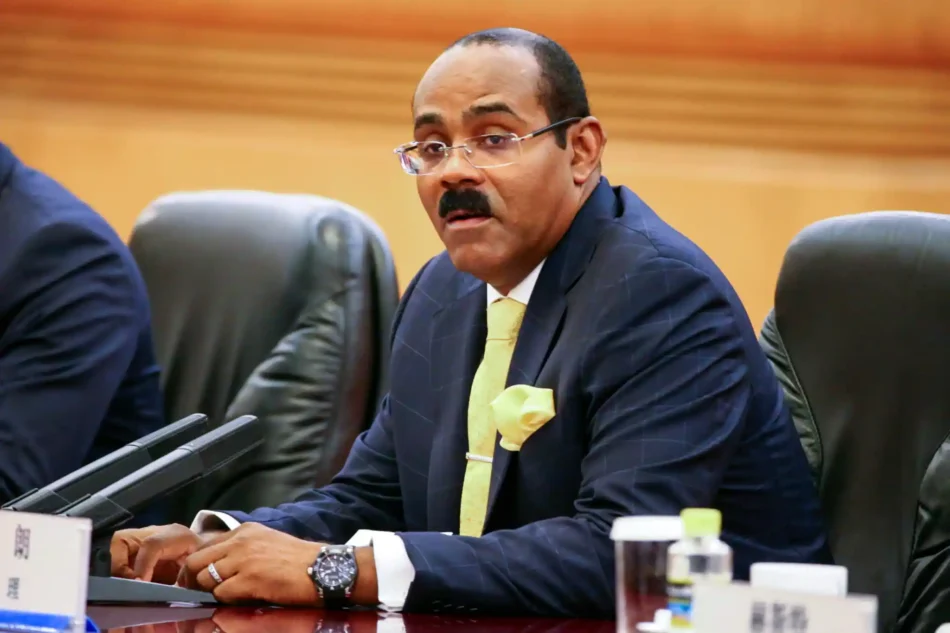
Prime Minister of Antigua and Barbuda Gaston Browne attends a signing ceremony with his China’s Premier Li Keqiang (not pictured) at the Great Hall of the People in Beijing August 26, 2014. REUTERS / Diego Azubel / Pool, File
From all appearances, authorities in Antigua are hiring more than 100 nurses from Ghana to work in its short-handed health system but the cabinet has been forced to push back on opposition allegations it will eventually replace the Cuban medical brigade.
The first batch of nurses is expected to arrive in the country over this weekend and will primarily be placed at the main hospitals and health centers on the island, officials said.
The recruitment exercise organized by the administration of Prime Minister Gaston Browne had seen local officials conducting interviews and examination of documents in Ghana while working in collaboration with the Antiguan and Barbudan medical council.
The hiring of the nurses has triggered widespread speculation in the federation especially because it is being done at a time when the U.S. is applying severe pressure on CARICOM member states to either to ditch the Cuban medical brigade program or to drastically amend the payment systems to nurses, doctors and biomedical engineers.
Information shared by the U.S. last year showed that practitioners take home less than 15 % of their monthly earnings with the remainder going to the Cuban government to address dire foreign exchange and other shortages.
The Bahamas, Guyana and Antigua had last year publicly pledged to make changes to the payment arrangements to comply with demands from the U.S. The US says it regards these arrangements as human trafficking and a form of forced labor, a perception with which many regional governments disagree.
Briefing reporters this week, government spokesman Maurice Merchant said that the Cuban program has not formally ended as the Cubans play a pivotal role in health care in the country.
“There have been speculations and erroneous statements erroneously being made in the public by politicians and individuals who just simply want to muddy the waters between the Republic of Cuba and the United States. It is unfortunate that this is being done. The government values the contributions that have been made and are being made by the Cuban government with regards to our health sector and as with everything, there is a period of transition,” Merchant said, hinting that the Cubans may depart in the future.
As the country prepares for this weekend’s arrival of the first batch, the opposition says it wants a full explanation of official plans.
Gisele Isaac, the Chairperson of the opposition United Progressive Party (UPP) says authorities have shared precious little with the populace until quite recently and legislators are angry.
“To say nothing to the very people whom these new medics will be treating and who will be paying their salaries is not only disrespectful but suspicious. We guess that the least important people-that is, the taxpayers-were not important enough to be told in advance,” she said. She argued that no mention was made of the cabinet’s plans during the annual throne speech, the budget presentation, or during the budget debate or by the minister of health or the minister of foreign affairs,” she said.
And through its mission in Barbados, Washington this week reiterated its opposition to the Cuban program. “Renting out Cuban medical professionals at exorbitant prices and keeping the profit for regime elites is not a humanitarian gift. It is forced labor. It treats the doctors as commodities rather than human beings and professionals. The corrupt Cuban regime is profiting off the forced labor of medical personnel,” the mission said in a social media post.
“The U.S. calls for an end to the Cuban regime’s coercive and exploitative labor export scheme,” the statement said. This program is not a gift from Cuba to the people of the Caribbean; it is an overpriced arrangement funded by local taxpayers. Money is often paid directly to the corrupt Cuban regime, which takes 80-95 per cent of the doctors’ salaries. This is a modern-day forced labor scheme. It comes at a high cost to participating countries, not only financially, but also in terms of basic human dignity and morality,” it stated.
For more on this story go to: Caribbean Life