The Role of Worthiness in the Accrual of Wealth
Worthiness may sound like an abstract idea, but it quietly influences nearly every financial decision a person makes. How much you believe you deserve success affects how you set goals, whether you take opportunities, and how you respond to setbacks. The same is true on a societal level: perceptions of who is “deserving” of wealth shape access, credibility, and economic mobility.
People often discover the emotional side of worthiness when dealing with financial challenges. For instance, someone exploring personal loan debt relief might be confronting the belief that strong money management is something they are supposed to already have mastered. That sense of falling short can undermine confidence. Yet worthiness is not about perfection. It is about believing you have the right to improve, grow, and pursue financial stability.
Understanding how worthiness influences wealth building provides insight into the deeper forces behind financial behavior.
Self Worth and the Psychology of Wealth Building
Psychologists have long recognized the connection between self worth and achievement. When people believe they are capable and deserving, they are more willing to set ambitious financial goals and take the steps necessary to reach them.
Worthiness affects several key behaviors:
Goal pursuit. People who feel worthy of financial success are more likely to set clear goals and stick to them.
Risk tolerance. Believing in your ability to handle outcomes encourages strategic risk taking in career moves, investments, and business ventures.
Resilience. Feelings of worthiness buffer against shame when facing obstacles, making it easier to recover from mistakes.
The American Psychological Association’s research on self efficacy and motivation shows that belief in one’s capabilities is strongly linked to persistence and achievement. Their insights on personal agency and behavior highlight how internal beliefs shape outcomes.
In wealth building, the psychological dimension is just as important as the financial one.
The Quiet Power of Identity in Financial Decisions
Worthiness is deeply tied to identity. If someone sees themselves as “bad with money,” they are less likely to invest, negotiate, or pursue opportunities. If they see themselves as resourceful and capable, their actions reflect that belief.
Identity based narratives often come from childhood, cultural messages, or past financial mistakes. These stories influence what people see as possible. For example:
A person who grew up in scarcity may feel guilty spending money even on necessities.
Someone who has always earned modest wages may struggle to picture themselves as financially successful.
A person who made past financial mistakes may feel unworthy of trying again.
These internalized beliefs can limit upward mobility as powerfully as external barriers.
Rewriting the narrative of worthiness begins with recognizing that wealth is not a reward for perfection. It is the result of repeated choices, opportunities, and access to knowledge.
How Society Defines Who Is “Deserving”
Worthiness is not only a personal belief. It is also a social judgment. Society often labels certain professions, backgrounds, or behaviors as more deserving of wealth than others. These perceptions influence everything from hiring practices to investment opportunities.
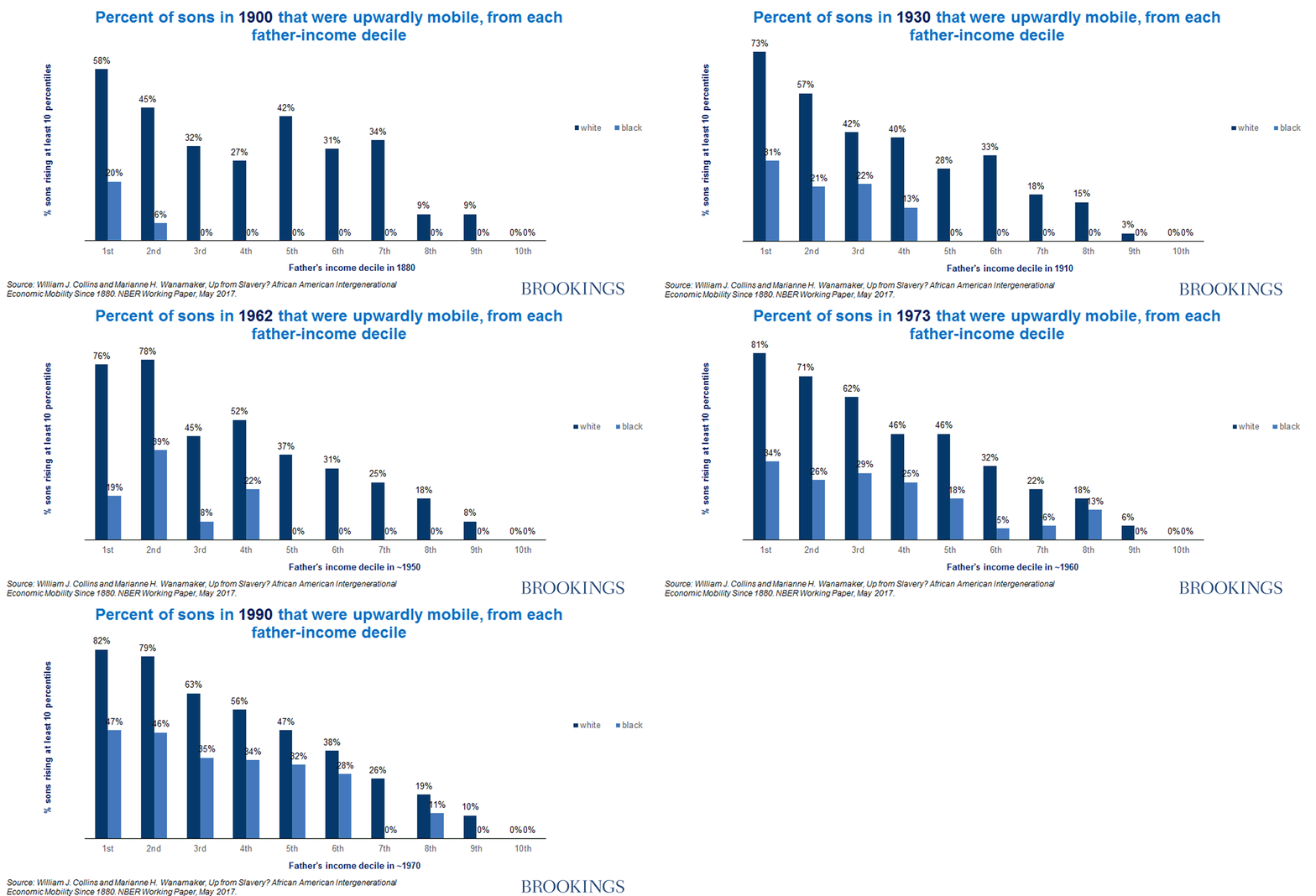
Sociologists have studied how deservingness narratives shape economic policy and public perception. The Brookings Institution provides research on economic mobility and social attitudes, including how opportunity is unevenly distributed. Their work offers insight into how structural and cultural factors shape financial outcomes.
Societal worthiness narratives affect individuals in subtle ways:
A job applicant with a nontraditional background may be seen as less “legitimate.”
A person from a wealthy family may be perceived as naturally competent, even without evidence.
An entrepreneur from an underrepresented community may struggle to secure funding despite strong ideas.
These systemic beliefs have real financial consequences.
Worthiness and Financial Risk Taking
Taking financial risks is often necessary to build wealth, but people vary widely in their willingness to do so. Worthiness plays a central role here.
If someone believes they deserve financial success, they are more likely to:
Pursue promotions or negotiate salaries
Invest in long term assets
Start or scale a business
Seek professional guidance
Experiment with new opportunities
If someone feels unworthy, they may reject these opportunities before even attempting them. They may assume failure, fear embarrassment, or believe success is reserved for others.
Interestingly, research from behavioral economics shows that people often undervalue their potential returns when they lack confidence. Confidence itself becomes a form of capital.
The Link Between Shame and Self Sabotage
One of the most powerful barriers to wealth accumulation is shame. Shame can cause people to hide financial problems, avoid asking questions, or disengage from planning. It can also lead to impulsive financial behaviors like overspending or procrastinating on important decisions.
Shame erodes worthiness by reinforcing the belief that financial mistakes define a person’s value. Breaking this pattern requires compassion, awareness, and intentional habit building.
Financial experts frequently emphasize that mistakes are part of the journey and not a reflection of capability. A single setback does not disqualify anyone from long term financial success.
Building Worthiness to Support Wealth Accrual
Worthiness is not fixed. It can expand as people gain knowledge, take action, and experience small wins. Building a stronger sense of worthiness might include:
Reframing narratives about money from “I am bad at this” to “I can learn this.”
Celebrating incremental progress.
Seeking mentorship or community support.
Educating oneself on financial tools and opportunities.
Practicing self compassion when mistakes happen.
Another important step is grounding wealth building in values rather than comparison. When financial goals align with personal purpose, worthiness naturally increases.
Worthiness as a Foundation for Financial Growth
Wealth accrual is not solely a technical endeavor. It is a psychological and social process shaped by how people see themselves and how they are seen by others. Without a sense of worthiness, even the best strategies fall short because the internal foundation for success is missing.
When individuals believe they are capable, deserving, and resilient enough to pursue financial growth, their behavior shifts. They take more initiative. They make more informed decisions. They open themselves up to opportunities that once felt out of reach.
Worthiness is not an accessory to financial success. It is a driver of it. And strengthening that inner belief can transform not only one’s financial reality but one’s sense of possibility in every aspect of life.