
Chief Meteorologist Contributes to Regional Weather Resilience Efforts

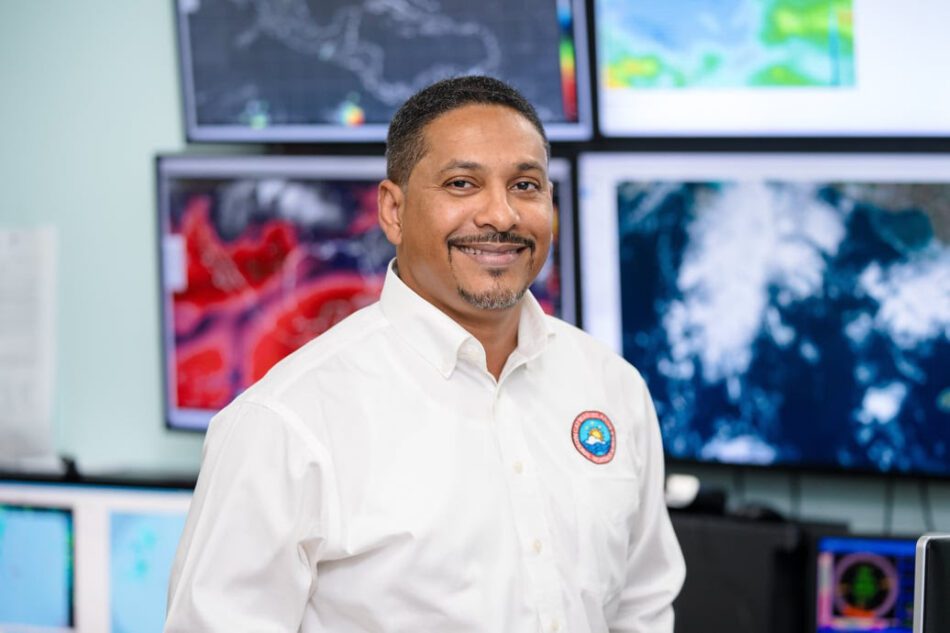
Photo Caption: Chief Meteorologist Kerry Powery
Cayman Islands National Weather Service Chief Meteorologist Kerry Powery presented critical infrastructure updates to the World Meteorological Organization’s Regional Association IV last month, reinforcing the territory’s leadership role in improving meteorological services across our region. As Chair of the Region’s Infrastructure Committee, a position he has held since 2021, Mr. Powery delivered a virtual presentation outlining progress made in 2025 and strategic priorities for 2026 across the 27-member region.
The updates covered improvements to observation networks, satellite data access, forecasting tools and the responsible integration of emerging technologies such as artificial intelligence. These regional infrastructure enhancements directly strengthen the Cayman Islands’ capability to issue accurate forecasts, operate robust early-warning systems and access critical data for hurricanes, marine hazards and extreme weather events.
“While this work is regional in scope, its purpose is very local,” Mr. Powery said. “Strengthening observation networks, improving access to satellite data and modern forecasting tools all contribute to better, more timely warnings for the Cayman Islands. This collaboration ensures that Caymanians and residents benefit from global science while helping to build resilience across the Caribbean.”
Priority initiatives for 2026 include expanded technical training for forecasters, enhanced marine observing and forecasting capabilities, wider operational deployment of artificial intelligence systems and continued development of regional observation networks.
Premier Hon. André Ebanks, who has responsibility for the Cayman Islands National Weather Service under the Cabinet Office, commended Mr. Powery’s regional leadership. “Climate resiliency is one of the subjects on the CARICOM meeting agenda,” said the Premier, who is now attending CARICOM’s 50th Annual Regular Meeting this week. “And so I thank Mr. Powery for taking on this additional level of responsibility on the regional stage. His leadership reflects a deep commitment not only to advancing meteorological services across the Caribbean, but to safeguarding the people, infrastructure and future of the Cayman Islands. This work strengthens our national resilience and reinforces the vital role of the National Weather Service in protecting our communities.”
Mr. Powery’s leadership underscores the Cayman Islands’ growing influence in regional meteorology and its commitment to collaborative climate resilience across the Caribbean.