Opinion | The Israel-Iran war and its first economic impacts on the Mena region
From fDi Intelligence
Oil prices are already on the rise, while the region’s tourism success will take a hit
By Mohamed Hafez
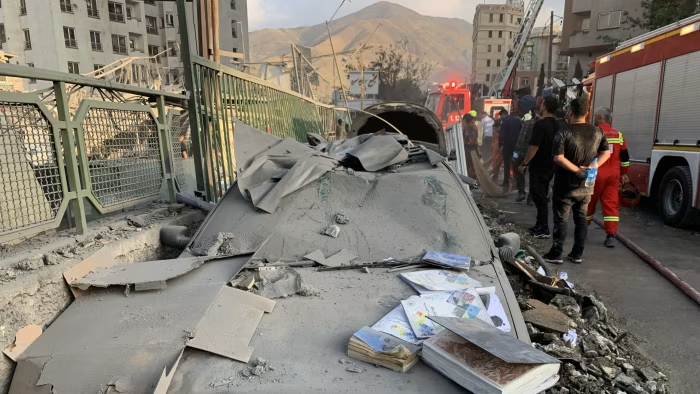
A view of a damaged vehicle in the Iranian capital, Tehran, following an attack, on June 13. Image via Getty
Mohamed Ibrahim Hafez is an FDI consultant and geoeconomics researcher at Nottingham Trent University in the UK
The well-prepared Israeli strikes on Iranian military and nuclear facilities that started at dawn on June 13, alongside the targeted assassination of at least 20 confirmed high-ranking leaders, is a dramatic escalation that will result in severe economic implications for neighbouring countries in the region.
US President Donald Trump and Israel’s Prime Minister Benjamin Netanyahu stated just a few hours ago that these military operations could last for days or even weeks, depending on Iran’s response and willingness to sign the nuclear deal proposed by the US.
Iran has not faced attacks of this scale since the Iraq war in the 1980s. Against this backdrop, regional markets have already started to react, and the economic shockwaves will be echoing sooner rather than later across the Middle East and north Africa (Mena) region.
One of the most immediate market reactions has been the surge in oil prices, which have already recorded the biggest daily rise since 2022 on June 13, and that momentum looks set to continue in the coming weeks.
While Gulf hydrocarbon exporters are enjoying this fiscal godsend, it comes with significant geopolitical risk, because many of these countries host US military bases, which Iran has now officially threatened to attack. On the flipside, import-dependent economies in North Africa will be facing widening fiscal and trade deficits, compounded by persistent and potentially destabilising inflationary pressure.
Moreover, Mena supply chains, already strained by past disruptions, higher shipping costs and delays, now face heightened risk as this escalation threatens key trade routes, introducing yet another element of unpredictability.
The Strait of Hormuz is the world’s most important oil transit chokepoint, which facilitates about a quarter of the global oil trade, with 70 per cent destined for Asia, and a fifth of the world’s trade in liquefied natural gas, especially from Qatar and the UAE. The strait is controlled by the Iranian government. If the conflict escalates, chances are it will leverage its control over the strait to serve its war agenda.
Also, the Suez Canal, which historically facilitated around 12 per cent of global trade and has already seen a 50 per cent drop in revenues last year due to the Red Sea crisis, could see further reductions in traffic if insurers hike premiums or carriers avoid the region altogether. Not only will inter- and intra-Mena exports be disrupted, but strategic commodity imports, including wheat, cooking oil and industrial inputs are now highly vulnerable to both price and supply shocks.
The projected economic implications don’t stop at energy and trade but extend to one of the sectors where Mena led globally in post-Covid recovery: tourism.
Egypt, Morocco, Jordan, Saudi Arabia and the UAE have all poured significant investment into revitalising their tourism sectors after the pandemic. This vital economic pillar, which was previously expected by Statista Markets Insights to grow by an annual 6 per cent to 2029 in the whole region, is now at serious risk. The geographical distance between Israel and Iran means the tourism fallout won’t be country-specific; the entire region is exposed.
Even if violence remains geographically contained, the optics of regional war are enough to trigger travel cancellations, discourage future bookings and prompt foreign ministries to issue cautionary advisories. In the best-case scenario, where diplomatic normalisation between Iran and Israel takes place, while unlikely in the short -term, recovery stalls. In the worst-case scenario, if the escalation deepens, tourism revenues collapse.
All of the above-mentioned regional economic implications will immediately send negative signals to both local and foreign greenfield and brownfield investors, likely causing delays in planned projects. The Gulf countries are in a relatively better position to absorb the economic fallout, unless Iran follows through on its threat to strike the US bases they host. In contrast, North African countries are likely to face severe economic shocks that could disrupt their development and financial plans. I genuinely hope diplomacy and multilateralism can play a decisive role in preventing further escalation, but realistically, that outcome seems unlikely.
For more on this story go to: FDI